

Radiology Billing Services That Get Every Study, Every Read, and Every Contrast Dose Paid
Imaging margins are thinner every year, and a radiology practice can't afford to lose a technical component, a contrast charge, or an authorization on a $1,200 MRI. We bill X-ray through PET and interventional radiology with modality-level coding, precise TC/26 split billing, and authorization tracking that starts before the patient is on the table.
Since 2014
Billing Nevada practices
Certified
radiology coders
4–5%
of net collections
No setup fee
60-day exit
What Radiology Billing Covers,
and Why It Demands Specialists
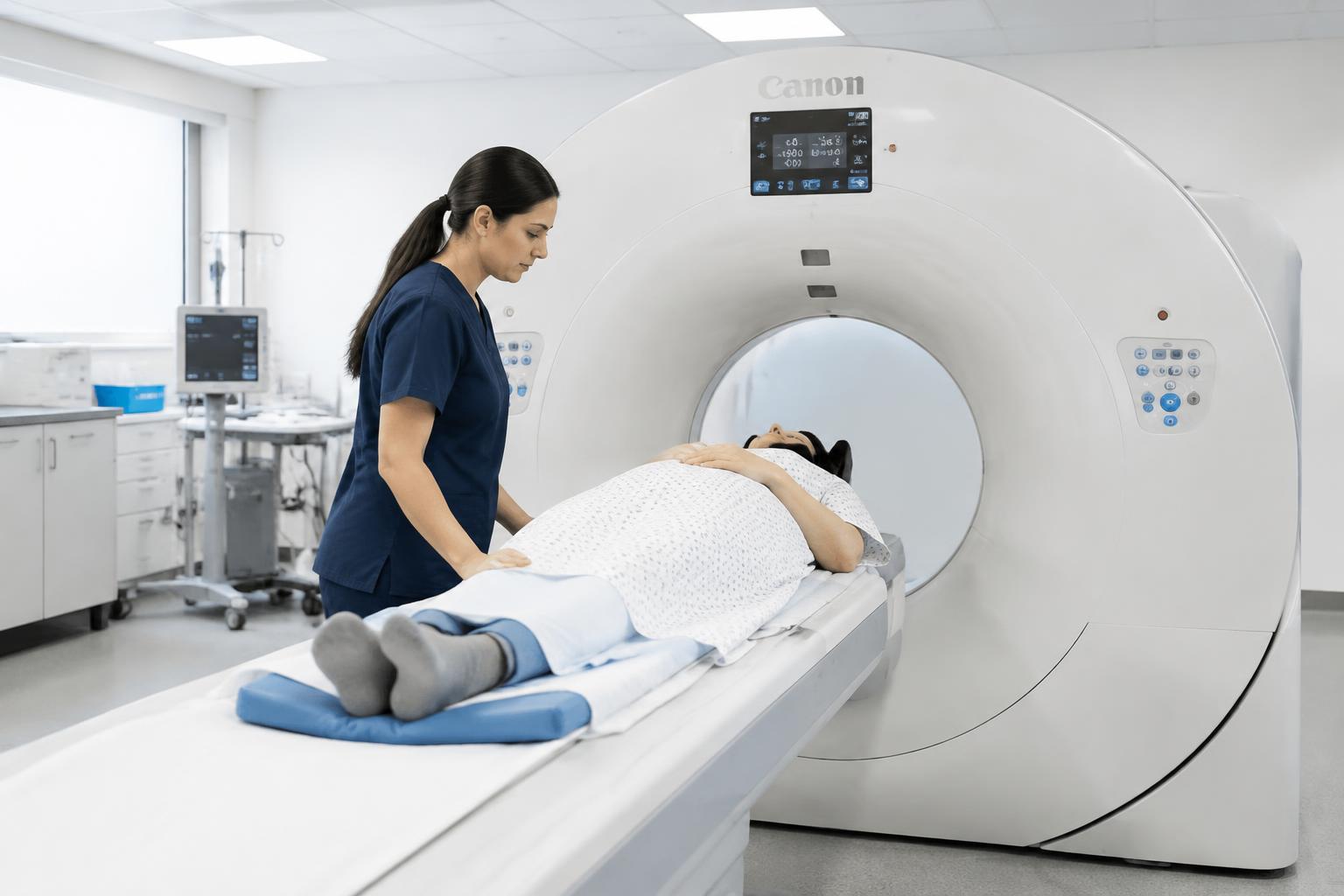
Radiology billing is the coding, claim submission, and reimbursement work behind diagnostic imaging and image-guided procedures. A single study can produce three payable pieces: the technical component for the equipment and technologist, the professional component for the radiologist's interpretation, and separately billable supplies such as contrast. Each must be coded to the modality, body region, views, contrast status, and setting, then matched to a signed order and a diagnosis that proves medical necessity.
Multiply that by hundreds of studies a day, and small errors become large losses. That's why radiology rewards billing teams who know the CPT 70000 series as well as your technologists know your scanners.
Professional,
Technical, and Global Billing, Split Correctly Every Time
| Billing method | What it covers | Who usually bills it | Modifier |
|---|---|---|---|
| Global | Equipment, technologist, and interpretation together | Imaging centers and practices that own the equipment and employ or contract the radiologist | None |
| Technical component (TC) | Equipment, supplies, and technologist | The facility or imaging center that owns the equipment | TC |
| Professional component (PC) | The radiologist's interpretation and signed report | Radiology groups reading for hospitals, imaging centers, or as teleradiologists | 26 |
Who bills which component depends on equipment ownership, the reading arrangement, and place of service. Bill globally when you should have billed the professional component, and the claim may be denied, recouped, or flagged for duplicate billing with the hospital. Bill only the professional component when you own the equipment, and the technical revenue is lost. We set up each relationship correctly, and check every claim against it.
Where Radiology Revenue Leaks
Between the Scanner and the Bank
Missing authorizations
on CT, MRI, PET, and nuclear cardiology, discovered only when the claim denies.
Ordering diagnoses that don't support necessity
under Medicare coverage policies or payer rules.
Contrast and radiopharmaceuticals left unbilled,
or billed without the agent, dose, and route in the report.
Wrong component billed
for the arrangement, or both the hospital and the group billing globally.
Under-coding from default codes,
such as "without contrast" when the report says "with and without," or fewer views than performed.
Missed add-on codes,
including 3D post-processing, imaging guidance, and digital breast tomosynthesis.
Charges that never cross the RIS-to-billing interface,
so completed studies are never billed at all.
Find out how many studies you performed but never got paid for.
Modality-Level Coding Across
the Full Imaging Spectrum
| Modality | Example codes | What decides the code |
|---|---|---|
| X-ray and fluoroscopy | 71045–71048 (chest, by number of views) | Body region and number of views documented |
| CT | 70450, 70460, 70470 (head: without, with, without and with contrast) | Body region and contrast status |
| MRI | 70551, 70552, 70553 (brain) | Body region and contrast status |
| Ultrasound | 76700 complete vs. 76705 limited (abdomen) | Complete vs. limited study, as documented |
| Mammography | 77067 screening; 77065/77066 diagnostic; 77063 screening tomosynthesis add-on | Clinical indication on the order, not the radiologist's preference |
| Bone density (DEXA) | 77080 | Frequency limits and qualifying diagnosis |
| Nuclear medicine | 78451–78454 (myocardial perfusion); 78300–78315 (bone imaging) | Study type, extent, and SPECT vs. planar |
| PET and PET/CT | 78815, 78816 | Coverage criteria for the indication |
| Contrast and radiopharmaceuticals | HCPCS Q9965–Q9967 (low-osmolar contrast), A95xx (gadolinium agents, radiopharmaceuticals) | Agent, dose, and route documented in the report |
| Imaging guidance and post-processing | 76942, 77012, 77021 (guidance); 76376, 76377 (3D rendering) | Separate reportability under NCCI |
These examples show the logic, not a complete list. We code every study from the final signed report, not from the order alone.
Interventional Radiology Coded
from Catheter to Closure
Interventional radiology is the most technical coding in the specialty. Vascular procedures use catheter placement families, where the most selective vessel reached sets the code, along with supervision and interpretation (S&I) codes or bundled codes that include imaging. Embolization, biopsies, drainages, venous access, and vertebral augmentation each follow their own bundling rules. Our IR coders, who hold certifications such as CIRCC, review each case report line by line, so nothing billable is lost and nothing bundled is billed twice.
Modifiers and Payment Rules That Decide What You're Paid
| Modifier or rule | When it applies | Revenue risk if missed |
|---|---|---|
| 26 and TC | Professional-only or technical-only billing | Denial, recoupment, or lost component revenue |
| 59, XS, XU | Distinct studies the NCCI edits would otherwise bundle | Separately payable studies denied |
| 76 and 77 | Repeat studies by the same or another physician on the same day | Repeat imaging denied as duplicate |
| 50, LT, RT | Bilateral studies and laterality | Underpayment or duplicate-claim denial |
| GG | Screening and diagnostic mammography on the same day | Diagnostic study denied |
| CT modifier | CT equipment that doesn't meet the NEMA XR-29 dose standard | Required payment reduction applied, or compliance risk if omitted |
| FX and FY | X-rays taken on film, or with computed radiography | Required Medicare reductions |
| Multiple procedure payment reduction (MPPR) | Several imaging studies in the same session | Payments that look short but are correct, or true underpayments missed |
| NCCI and MUE edits | Bundled pairs and unit limits | Automatic denials |
Authorization and Medical Necessity,
Settled Before the Scan
Most commercial and Medicare Advantage plans require prior authorization for CT, MRI, PET, nuclear cardiology, and other advanced imaging, often through radiology benefit managers such as Carelon, eviCore, or Evolent. We confirm requirements for every order, submit the clinical information, track approvals against the scheduled date and exact CPT code, and flag studies whose protocol changes on the day.
For Medicare, medical necessity follows national coverage determinations and Noridian's local coverage determinations for Jurisdiction E. We check every ordering diagnosis against them before the claim goes out. Medicare's Appropriate Use Criteria program for advanced imaging was rescinded for 2024, so we focus on the rules that still drive denials: signed orders, supported diagnoses, and payer authorization.
Mammography,
IDTF, and Teleradiology Compliance
Mammography:
we keep each facility's FDA MQSA certification on file for Medicare claims, and code screening and diagnostic studies to the documented indication.
Independent diagnostic testing facilities (IDTFs):
we keep enrollment, supervising physician records, and required supervision levels aligned with Medicare's IDTF standards.
Teleradiology:
we track radiologist licensure and payer enrollment in every state where your group reads, so no interpretation is billed under an unlicensed or unenrolled provider.
MIPS:
for radiologists billing Medicare, we support quality data capture and reporting, to protect against payment penalties.
Radiology Billing Services,
from Order Intake to Final Payment
Eligibility and benefits verification.
We confirm coverage, deductibles, and network status for every scheduled study, including the patient's share of advanced imaging costs.
Prior authorization management.
We submit, track, and match authorizations to the scheduled CPT code and date, with RBM portals worked daily.
Charge capture and reconciliation.
We reconcile every completed study in your RIS against billed charges each day, so a study that never crossed the interface is caught, not lost.
Certified radiology coding.
We code from the final signed report: modality, body region, views, contrast, laterality, guidance, and add-on codes, plus ICD-10-CM codes that support necessity.
Split and global billing.
We bill TC, 26, or global correctly for each reading and ownership arrangement, and coordinate with hospital partners to prevent duplicates.
Contrast and supply capture.
We bill contrast agents and radiopharmaceuticals with the agent, dose, and route the report documents.
Claim scrubbing and submission.
Claims are checked against NCCI, MUE, and payer edits, then submitted within 24 hours of the signed report.
Payment posting and underpayment recovery.
We post every payment, compare it with your fee schedule or contract after MPPR and other reductions, and pursue true shortfalls.
Denials and appeals.
Every denial is worked within 5 business days, sorted by cause (authorization, necessity, modifier, or bundling) and fixed at the source.
Patient billing.
We send clear statements for deductibles and coinsurance, which are high on advanced imaging, with payment plans that keep patients coming back.
Credentialing and enrollment.
We enroll radiologists, IDTFs, and imaging centers with Medicare, Nevada Medicaid, and commercial payers, including multi-state enrollment for teleradiology.
Reporting.
Each month, you get collections, denials, and AR by modality, payer, and referring source, plus authorization approval rates.
From Order to Payment: Our 7-Step
Radiology Billing Process
- 1
Verify and authorize each study before the scan.
- 2
Reconcile charges from the RIS daily, so no study is left unbilled.
- 3
Code from the signed report, not the order.
- 4
Apply the right component (TC, 26, or global) and every needed modifier.
- 5
Scrub and submit within 24 hours of the final report.
- 6
Audit every payment against your contracts, after allowed reductions.
- 7
Resolve every denial at its root cause, and report results by modality.
See your denials and collections broken down by modality.
Built for Every Imaging
Setting in Nevada
- Freestanding imaging centers billing globally, and managing high-volume authorizations.
- Independent diagnostic testing facilities (IDTFs) with Medicare supervision and enrollment requirements.
- Hospital-based radiology groups billing professional components for inpatient, outpatient, and emergency reads.
- Interventional radiology practices and office-based labs.
- Teleradiology groups reading across multiple states.
- Mobile imaging providers, with place-of-service and transportation billing rules.
- Orthopedic, cardiology, and multispecialty practices with in-office imaging. See cardiology billing.
Out-of-Network Radiologists and the No Surprises Act
Radiology is an ancillary service under the No Surprises Act. Out-of-network radiologists reading at in-network hospitals can't balance bill patients, and can't use the notice-and-consent exception. Payment disputes go through open negotiation and federal independent dispute resolution. We track every deadline for hospital-based groups. See out-of-network billing.
Imaging for Injury Cases
Imaging centers in Las Vegas and Reno treat many accident and workplace injury patients. We bill MRI and CT studies for personal injury cases, with lien tracking and fast records turnaround for attorneys, and for workers' compensation under the Nevada Medical Fee Schedule.
Payers We Bill for Nevada Imaging Providers
Medicare through Noridian (Jurisdiction E), Medicare Advantage plans, Nevada Medicaid and its managed care plans, Nevada Check Up, commercial health plans and their radiology benefit managers, TRICARE, workers' comp insurers, and auto and liability carriers.
Pricing That Scales with Your Study Volume
Radiology billing is priced at 4–5% of net collections, with volume pricing from 4.0% for high-volume imaging centers and multi-site groups. There's no setup fee and no per-claim charge, and you can leave with 60 days' notice.
Commitments
We Put in Writing
Claims submitted within 24 hours of the final signed report.
Daily charge reconciliation between your RIS and the billing system.
Every authorization matched to the scheduled CPT code before the study.
Every denial worked within 5 business days, with root-cause reporting by modality.
A named account manager who knows your modalities, reading arrangements, and payers.
BAA signed before we see any patient data.
Radiology Billing Questions
Imaging Providers Ask Us
Can't find what you need? Our Nevada team answers every question before you commit.
They cover eligibility checks, prior authorization, charge capture, certified coding, TC/26 and global billing, contrast billing, claim submission, payment posting, denials and appeals, patient billing, credentialing, and reporting.
The technical component (modifier TC) covers equipment, supplies, and the technologist. The professional component (modifier 26) covers the radiologist's interpretation and report. A global claim bills both, when one entity provides both.
Most imaging services fall in the CPT 70010–79999 range: diagnostic radiology (including CT and MRI), ultrasound, breast imaging, bone density, radiation oncology, and nuclear medicine. Interventional procedures also use codes from the surgery section.
Yes, where the payer allows it. Contrast agents and radiopharmaceuticals are billed with HCPCS codes, and the report must document the agent, dose, and route.
Yes. We work directly with health plans and radiology benefit managers, and match each approval to the exact CPT code and date of service.
No. CMS rescinded the AUC program for advanced imaging for 2024. Medical necessity, signed orders, and payer authorization rules still apply, and we check all three.
Yes. We track licensure and payer enrollment for each radiologist in every state where they read, and bill each interpretation correctly.
We work inside your current RIS, PACS, and billing system, and reconcile charges through your existing interfaces. Tell us your systems, and we'll confirm the workflow during your free review.
Most radiology clients are fully onboarded within 2–3 weeks. Claims keep moving during the transition.
Keep exploring
Your Scanners Run All Day. Your Collections Should Keep Up.
Send us 90 days of claims and remittances. We'll show you denials by modality, missing charges, component errors, and underpayments, with an estimate of what's recoverable. You get a written review within 5 business days, at no cost.
Please don't include patient information. We sign a BAA before reviewing any data.