Concurrent Reviews That Lapse
Residential, detox, PHP, and IOP stays are approved a few days at a time. When the next review isn't completed before the approved days run out, the payer stops paying for every day after that.


Get paid for every level of care, from the first assessment to the last day of treatment. Substance use disorder (SUD) billing built for authorization-heavy programs.
Nevada Medical Billing provides substance abuse billing services for addiction treatment programs, opioid treatment programs, MAT clinics, and behavioral health organizations across Nevada. We handle what decides whether SUD claims get paid: verification of benefits, utilization review and concurrent authorizations, level-of-care coding from outpatient through residential, medication-assisted treatment billing, drug testing compliance, and 42 CFR Part 2 privacy rules. We bill Nevada Medicaid and its five managed care plans, Medicare, TRICARE, and commercial and out-of-network payers.
HIPAA and 42 CFR Part 2 compliant · No obligation
Share a few details and an SUD billing specialist will review your authorizations, levels of care, and denials with you.
Substance abuse billing is harder because one patient can move through several levels of care, and each level is billed, authorized, and reviewed differently. Detox and residential care are often billed per day on a facility claim. IOP and PHP may be billed per day or per service, depending on the payer. Outpatient counseling and MAT visits are billed per session on a professional claim. Every step down in care needs a new authorization, and payers review medical necessity every few days.
The dollar stakes are high. A missed concurrent review on a residential stay can cost an entire week of per-diem revenue, and substance use treatment records carry extra federal privacy protection under 42 CFR Part 2, so even sending records to a payer has rules.
Residential, detox, PHP, and IOP stays are approved a few days at a time. When the next review isn't completed before the approved days run out, the payer stops paying for every day after that.
Admitting a patient without confirming SUD benefits, out-of-network coverage, deductibles, and the right payer (including behavioral health carve-outs) leads to denied stays and large patient balances that rarely get collected.
When a program is out of network, some payers send the check to the patient instead of the program. Without a signed assignment of benefits and follow-up, that revenue disappears.
Billing a residential day on a professional claim, or IOP with codes the payer doesn't accept, leads to rejections. Each payer and level of care has its own combination of revenue codes, HCPCS codes, and CPT codes.
Urine drug testing is one of the most audited areas in addiction treatment. Definitive testing billed routinely, without a documented clinical reason, is a common source of denials and recoupments.
When a patient moves from residential to PHP to IOP, each level needs its own approval. Sessions given before the new level is authorized are often unpaid.
Nevada has overhauled how Medicaid pays for SUD treatment, and programs that haven't kept up are leaving money unbilled.
1115 SUD demonstration waiver: Nevada's 1115 SUD waiver expands Medicaid coverage across ASAM levels of care, including residential treatment in institutions for mental disease (IMDs), with rules in Medicaid Services Manual Chapter 4100.
New Provider Type 93: Nevada Medicaid created Provider Type 93 (Substance Use Treatment), open for enrollment since July 1, 2024. It replaces the older Provider Type 17 Specialty 215 model, and transferred authorizations received new numbers that must appear on PT 93 claims.
Residential moved to Medicaid billing: Since January 1, 2025, residential SUD providers are expected to bill Medicaid for eligible patients instead of relying on block grant funding.
Outpatient prior authorization relaxed: Many ASAM Level 1 services, including group counseling (H0005), peer support (H0038), and psychotherapy codes, no longer need prior authorization before services begin, within the program's service limits.
Managed care everywhere: Since January 2026, most Medicaid members statewide are in one of five MCOs, each with its own SUD authorization process.
Opioid treatment programs bill Nevada Medicaid under their own provider specialty for methadone services.

The ASAM Criteria define levels of care from intensive inpatient withdrawal management to outpatient counseling. Here's how each level is typically billed.
ASAM 3.2, 3.7
per diem, UB-04
ASAM 3.1–3.7
per diem, UB-04
ASAM 2.5
per diem or H0035
ASAM 2.1
H0015 or rev 0906
ASAM 1
CMS-1500 per visit
Losing days at step-down? Get a Free Substance Abuse Billing Audit and we'll match your authorizations to every level of care.
HIPAA and 42 CFR Part 2 compliant · No obligation
| Level of care | Common codes | Claim type and POS | What we get right |
|---|---|---|---|
| Assessment and intake | H0001, 90791, T1007 (treatment plan) | Professional | ASAM-based assessment documented to support placement |
| Outpatient (ASAM 1, under 9 hours/week for adults) | H0004, H0005, 90832–90837, 90846/90847 (family therapy), 90853, H0038 (peer support), H0006 (case management) | Professional (CMS-1500), POS 57 or 11 | Time units, group size, HQ modifier for groups |
| H0015 per diem, or revenue code 0906 (chemical dependency) or 0905 (psychiatric, for co-occurring tracks) with HCPCS per payer | Professional or institutional, POS 57 | Hours per day and days per week documented | |
| H0035, or revenue codes 0912/0913 per payer | Institutional or professional | Daily hours and medical oversight documented | |
| Residential (ASAM 3.1–3.7) | H0018 (short-term), H0019 (long-term), H2036, revenue codes 1002, 0944/0945 per payer | Institutional (UB-04) or professional per payer, POS 55 | Per-diem days matched to concurrent review approvals and annual day limits |
| Halfway house / transitional residential | H0017 per diem | Per payer, POS 55 | Kept separate from short-term residential codes |
| Withdrawal management (detox) | H0008/H0009 (hospital inpatient), H0010–H0014 (residential and ambulatory levels), revenue codes 0116/0126 per payer | Institutional (UB-04) | Code matched to setting and level of medical monitoring |
| Crisis | H2011 (HT for team, GT for telephonic in Nevada Medicaid) | Professional | Crisis documentation and modifiers |
| Screening and brief intervention | 99408/99409 (commercial), G0396/G0397 (Medicare) | Professional | Time thresholds and payer-specific codes |
Code sets vary by payer: Nevada Medicaid, MCOs, Medicare, and commercial plans each specify their own combination. We map yours before go-live.
Medication-assisted treatment is billed very differently depending on where it's delivered.
| MAT setting | How it's billed | Key codes |
|---|---|---|
| Weekly bundles covering the drug and services, plus add-ons | G2067 (methadone), G2068 (oral buprenorphine), G2069 (injectable buprenorphine), G2073 (naltrexone), G2074 (non-drug bundle), G2076 (intake), G2077 (periodic assessment), G2078/G2079 (take-home supplies), G2080 (added counseling), G1028 (naloxone) | |
| OTP billing Medicaid or commercial | Per-dose or per-diem codes per payer | H0020 (methadone administration), plus counseling codes |
| E/M visits plus injectable drug codes where the practice supplies the drug | 99202–99215, J0577/J0578 (extended-release buprenorphine), J2315 (naltrexone injection) | |
| Naloxone and harm reduction | Per payer | G1028 or pharmacy benefit |
Since the federal X-waiver was eliminated in 2023, any DEA-registered prescriber can treat opioid use disorder with buprenorphine, which means more primary care and psychiatry practices are billing MAT. psychiatry billing services
NDC reporting: When a program supplies MAT drugs such as extended-release buprenorphine or naltrexone, Medicaid and many commercial plans require the National Drug Code (NDC) and units on the claim alongside the HCPCS code. Missing or mismatched NDCs are a common reason MAT drug lines are denied.
Urine drug testing is necessary in addiction treatment, and heavily audited. We bill presumptive testing (80305–80307) and definitive testing (G0480–G0483) only with a documented clinical reason, matched to the frequency in the treatment plan and each payer's policy. That protects your program from the recoupments that follow routine, unsupported definitive testing.
Virtual counseling, group sessions, and MAT follow-ups are now routine in outpatient SUD care. Each payer sets its own place of service (02 or 10), telehealth modifier (95 or GT), audio-only rules, and limits on which services can be delivered virtually. We verify telehealth coverage before virtual sessions start and apply each payer's rules to every claim, including Nevada Medicaid's GT modifier for telephonic services where it applies.
Many patients receive mental health and substance use treatment at the same time. When both are billed for the same day, payers may deny one as a duplicate or bundle it into a program per diem. We check program contracts and payer bundling rules before billing, so separately billable psychiatric or therapy services are billed correctly and services included in a per diem aren't billed twice. mental health billing services
Our substance abuse billing services cover every step from the admissions call to the final payment. Choose complete revenue cycle management or the services your program needs.
We confirm SUD coverage by level of care, annual day and visit limits, in- and out-of-network benefits, deductibles, out-of-pocket maximums, carve-out vendors, and authorization rules, fast enough to support same-day admission decisions. Eligibility Verification
We request initial authorizations and complete concurrent reviews with your clinical team, using ASAM-based documentation to justify continued stay and each step down in care. We prepare your clinicians for peer-to-peer reviews and respond to payer medical records requests on time. Prior Authorization
We bill each level with the claim form, revenue codes, HCPCS codes, and CPT codes the payer requires, and match per-diem days to approved days.
UB-04 and CMS-1500 claims go through a pre-payment review for authorization numbers, place of service, payer-specific code sets, duplicate-day conflicts, and NCCI edits, then are submitted within 48 hours.
We bill Medicare OTP weekly bundles, Medicaid and commercial MAT services, and office-based buprenorphine and naltrexone treatment.
We appeal medical necessity, level-of-care, and authorization denials with clinical documentation, and use mental health parity rules when payers limit SUD care more strictly than medical care. Denial Management
We secure assignment of benefits, negotiate single case agreements, follow up on out-of-network payments, and track checks that payers send to patients.
We post payments daily and compare per-diem and per-service payments to contracts and expected rates. Payment Posting
We work open claims by value, starting with high-dollar residential and detox stays. AR Follow-Up
We enroll programs and clinicians with Nevada Medicaid (including Provider Type 93), the five MCOs, Medicare, and commercial plans, and credential LADCs, counselors, and MAT prescribers. Credentialing
Clear statements and payment plans, handled with the sensitivity addiction treatment requires. Patient Billing
In addiction treatment, revenue depends on two things happening before the payer asks: knowing what's covered, and proving the patient still needs the current level of care.
At first call: Benefits are verified by level of care, so admissions staff know what's covered before the patient arrives.
At admission: Initial authorization is requested with the ASAM assessment and placement rationale.
During the stay: Concurrent reviews are scheduled before approved days run out, with updated clinical progress.
At step-down: The next level's authorization is approved before the transition date.
At discharge: The authorization trail is complete, so every billed day is supported.
Substance use disorder treatment records have extra federal protection under 42 CFR Part 2. The updated Part 2 rule, which programs had to comply with by February 16, 2026, aligns many requirements with HIPAA, but patient consent and disclosure rules still apply to SUD records. We sign a Business Associate Agreement (and Part 2 qualified service organization terms where needed), limit access by role, and share only the minimum records payers need to process claims and authorizations.
Authorization and concurrent review gap check
Level-of-care coding and claim form review
Out-of-network payment and patient-check tracking
We respond within 1 business day. HIPAA and Part 2 compliant. No obligation.
HIPAA and 42 CFR Part 2 compliant · No obligation
| Denial cause | How we resolve it |
|---|---|
| Days billed past the approved stay | Request retro-review where allowed; schedule concurrent reviews before approval ends |
| Level of care not medically necessary | Appeal with ASAM assessment, progress notes, and relapse risk documentation; prepare peer-to-peer reviews |
| Annual residential or visit limit exhausted | Confirm limits at VOB, appeal under parity rules where limits are stricter than medical benefits, or set patient expectations up front |
| Wrong claim form, code set, or place of service | Rebill on the correct UB-04 or CMS-1500 with the payer's codes and POS 55 or 57 |
| Step-down billed before new authorization | Secure the authorization and appeal with dates of clinical change |
| Duplicate-day denial on co-occurring services | Separate billable services from the per diem and rebill per payer bundling rules |
| MAT drug line denied for missing NDC | Add NDC and units and resubmit |
| Drug testing not medically necessary | Supply clinical rationale, or adjust testing frequency to policy going forward |
| Out-of-network payment sent to patient | Pursue payment with assignment of benefits and patient follow-up |
| Provider not enrolled under the right Medicaid provider type | Complete PT 93 or MCO enrollment, then rebill eligible dates |
| Part 2 consent missing for records requests | Obtain compliant consent and resubmit records |
| Program type | What we handle for you |
|---|---|
| Outpatient SUD clinics | Counseling, group, peer support, and case management billing |
| IOP and PHP programs | Per-diem or per-service billing, hours documentation, concurrent reviews |
| Residential treatment centers | Per-diem facility billing, daily UR, step-down authorizations |
| Detox and withdrawal management | Level-specific coding and short-stay authorizations |
| Opioid treatment programs (OTPs) | Medicare weekly bundles, Medicaid methadone billing, take-home doses |
| Office-based MAT practices | E/M plus injectable buprenorphine and naltrexone billing |
| Dual-diagnosis programs | Mental health and SUD services billed together correctly |
| Programs moving from block grants to Medicaid | PT 93 enrollment and new Medicaid billing setup |
| Payer category | Plans |
|---|---|
| Nevada Medicaid | Fee-for-service, including SUD services under MSM Chapter 4100 and the 1115 waiver |
| Nevada Medicaid managed care | Anthem Blue Cross and Blue Shield, CareSource, Health Plan of Nevada, Molina Healthcare of Nevada, SilverSummit Healthplan |
| Medicare | Noridian Healthcare Solutions (Jurisdiction E), including the OTP benefit |
| Medicare Advantage | Health Plan of Nevada/UnitedHealthcare, Humana, Aetna, Anthem, and other MA plans |
| Commercial | Anthem BCBS Nevada, UnitedHealthcare/Optum, Aetna, Cigna, Hometown Health, Prominence Health Plan |
| Behavioral health carve-outs | Vendors that manage SUD benefits for commercial plans |
| Military | TRICARE |
| Out-of-network | Single case agreements and OON claims with assignment of benefits |
We bill in the systems SUD programs use, including Kipu, Sunwave, BestNotes, Lightning Step, Alleva, CentralReach, Valant, AdvancedMD, and Tebra/Kareo. No software change needed. EHR Integration
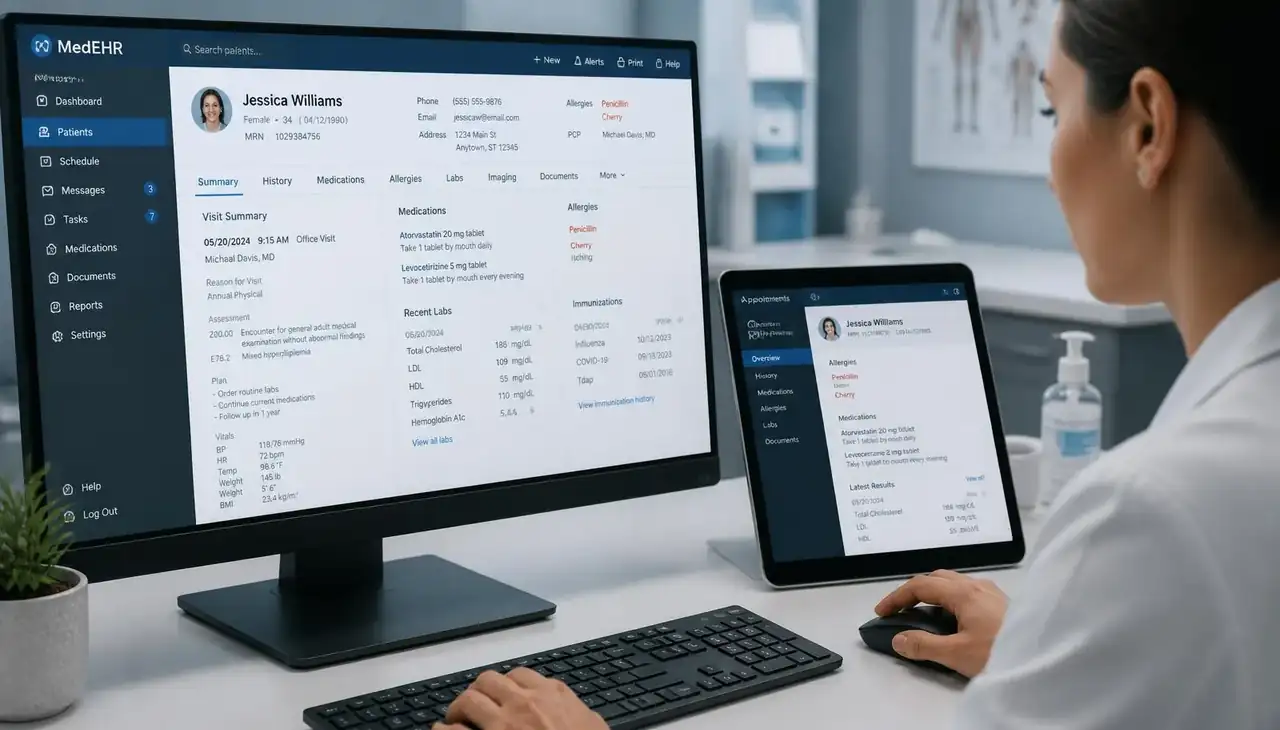


Free substance abuse billing audit: We review 90 days of claims, authorizations, concurrent reviews, denials, and A/R by level of care.
Secure setup: We sign a BAA and Part 2 terms, then connect to your EHR, clearinghouse, and payer portals.
Payer and code mapping: We confirm each payer's claim form, code set, and authorization process for every level of care you offer.
Enrollment check: We confirm your Nevada Medicaid provider type, MCO contracts, and clinician credentialing.
Census and authorization inventory: Every current patient's level, approved days, and next review date go into tracking.
Go-live: Daily VOB, UR support, charge entry, and submission begin.
Legacy A/R cleanup: We work old claims in parallel, starting with high-dollar residential and detox stays.
Monthly review: KPI report and a call with your dedicated account manager.
These are the performance standards we manage your SUD revenue cycle to, based on industry best practices.
| KPI | What it measures | Best-practice target |
|---|---|---|
| First-pass clean claim rate | Claims paid without rework | 95% or higher |
| Denial rate | Claims denied on first submission | Under 5% |
| Days in A/R | Average time from service to payment | Under 35 days for in-network claims |
| Unauthorized days | Days of care billed without an approval | Zero, with concurrent review tracking |
| VOB turnaround | Time from first call to benefits answer | Same day |
| Claim submission | Time from service to claim sent | Within 48 hours |
Residential or PHP days delivered after the last approved review
IOP billed with codes or forms the payer doesn't accept
Definitive drug tests billed without documented clinical reasons
Out-of-network checks sent to patients and never collected
Medicaid claims still billed under the old provider type
Step-down levels started before the new authorization
Substance abuse billing is usually priced as a percentage of monthly collections, commonly 4–9%. Outpatient and MAT programs typically fall at the lower end. Residential, detox, and PHP programs with daily utilization review and out-of-network work fall higher. There are no setup fees, the agreement is month-to-month with 30-day notice, and you get a fixed quote after your free audit.
HIPAA and 42 CFR Part 2 compliant · No obligation
| Factor | In-house biller | Nevada Medical Billing |
|---|---|---|
| Utilization review | Falls on clinical staff | Scheduled and tracked by our team |
| Level-of-care coding | Learned by trial and error | Mapped per payer before go-live |
| Nevada Medicaid changes | PT 93 and MSM 4100 often missed | Built into enrollment and billing |
| Out-of-network collections | Often written off | Pursued with assignment of benefits |
| Absences and turnover | Billing stops | Backup team keeps working |
| Cost | Salary, benefits, software | One fee tied to collections |
"Patients in treatment will lose authorizations." Every current authorization and review date is loaded before go-live.
"Our cash flow will drop." We work old claims in parallel while new ones go out.
"Our patients' privacy is at risk." We follow HIPAA and 42 CFR Part 2, with role-based access and minimum-necessary disclosure.
"We're locked in." You're not. The agreement is month-to-month with 30-day notice.
SUD billing follows CPT, HCPCS, ICD-10-CM, and revenue code guidelines, Nevada Medicaid MSM Chapter 4100, Medicare OTP rules, NCCI edits, OIG guidance on drug testing, mental health parity rules, HIPAA, and 42 CFR Part 2.
Every level of care: Detox through outpatient, plus OTP and office-based MAT.
Authorization control: Concurrent reviews and step-downs tracked before approvals run out.
Nevada Medicaid expertise: PT 93, MSM Chapter 4100, the 1115 waiver, and five MCOs.
Privacy first: HIPAA and 42 CFR Part 2 built into every workflow.
Out-of-network recovery: Assignment of benefits and single case agreements handled.
No lock-in: Month-to-month agreement with 30-day notice.

Las Vegas: Residential and detox centers, IOP and PHP programs, opioid treatment programs, and MAT clinics across the valley. Las Vegas billing
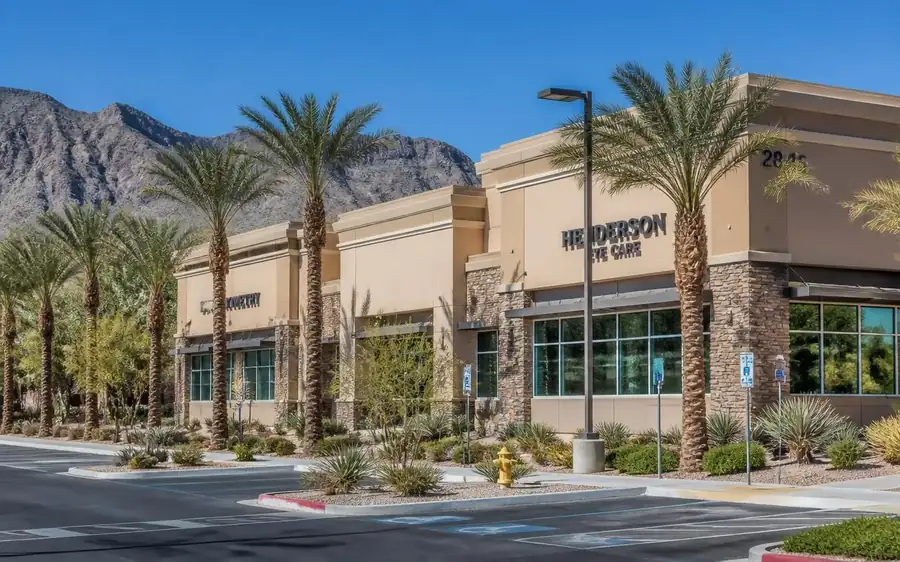
Henderson: Outpatient and IOP programs with heavy commercial and out-of-network volume. Henderson billing
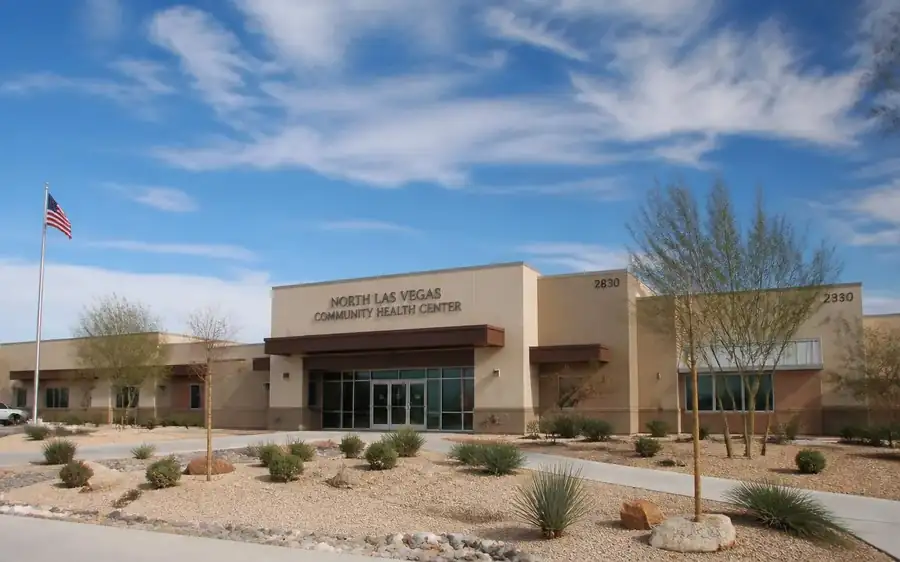
North Las Vegas: Community SUD providers and OTPs serving many Nevada Medicaid MCO patients. North Las Vegas billing

Reno: Treatment programs serving Washoe County and rural northern Nevada. Reno billing

Carson City: Outpatient SUD and MAT programs, plus rural providers billing CareSource and SilverSummit. Carson City billing
We also support treatment programs in Sparks, Pahrump, Elko, Fallon, and Mesquite.
We help Nevada treatment programs verify benefits fast, keep every level of care authorized, bill the right codes, and recover out-of-network revenue.
Free 90-day review · No obligation · HIPAA and 42 CFR Part 2 compliant
Behavioral health billing servicesPsychiatry billing servicesSpravato billing servicesPrimary care billing servicesSubstance abuse billing services manage the revenue cycle for addiction treatment programs: verification of benefits, utilization review, coding by level of care, claim submission, payment posting, denial appeals, A/R follow-up, credentialing, and patient billing.
It depends on the level of care and payer. Common codes include H0001 (assessment), H0004 and H0005 (individual and group counseling), H0015 (intensive outpatient), H0035 (partial hospitalization), H0010–H0014 (withdrawal management), psychotherapy CPT codes, and facility revenue codes for residential and detox stays.
Some payers want per-diem HCPCS codes such as H0015 or H0035 on a professional claim; others want revenue codes on an institutional claim. We confirm each payer's method and document the required hours per day and days per week.
Medicare-enrolled OTPs bill weekly bundles using G2067–G2080, which cover medication and services such as counseling and drug testing, with add-on codes for intake, periodic assessments, and take-home supplies.
Yes. Under Nevada's 1115 SUD waiver and MSM Chapter 4100, Medicaid covers residential treatment at qualifying ASAM levels, and residential providers have been expected to bill Medicaid since January 1, 2025.
Provider Type 93 is Nevada Medicaid's substance use treatment provider type, open for enrollment since July 1, 2024. It replaces the older Provider Type 17 Specialty 215 model for SUD agencies.
We schedule concurrent reviews before approved days run out, submit ASAM-based clinical updates with your team, and request step-down authorizations before the transition date.
Yes. We follow the updated Part 2 rule, which programs had to comply with by February 16, 2026, alongside HIPAA, with role-based access and minimum-necessary disclosure.
Yes. We verify out-of-network benefits, secure assignment of benefits, negotiate single case agreements, and follow up when payers send checks to patients.
Most programs pay 4–9% of collections, depending on levels of care and authorization workload. We give a fixed quote after a free audit.