Nevada Med Billing logo
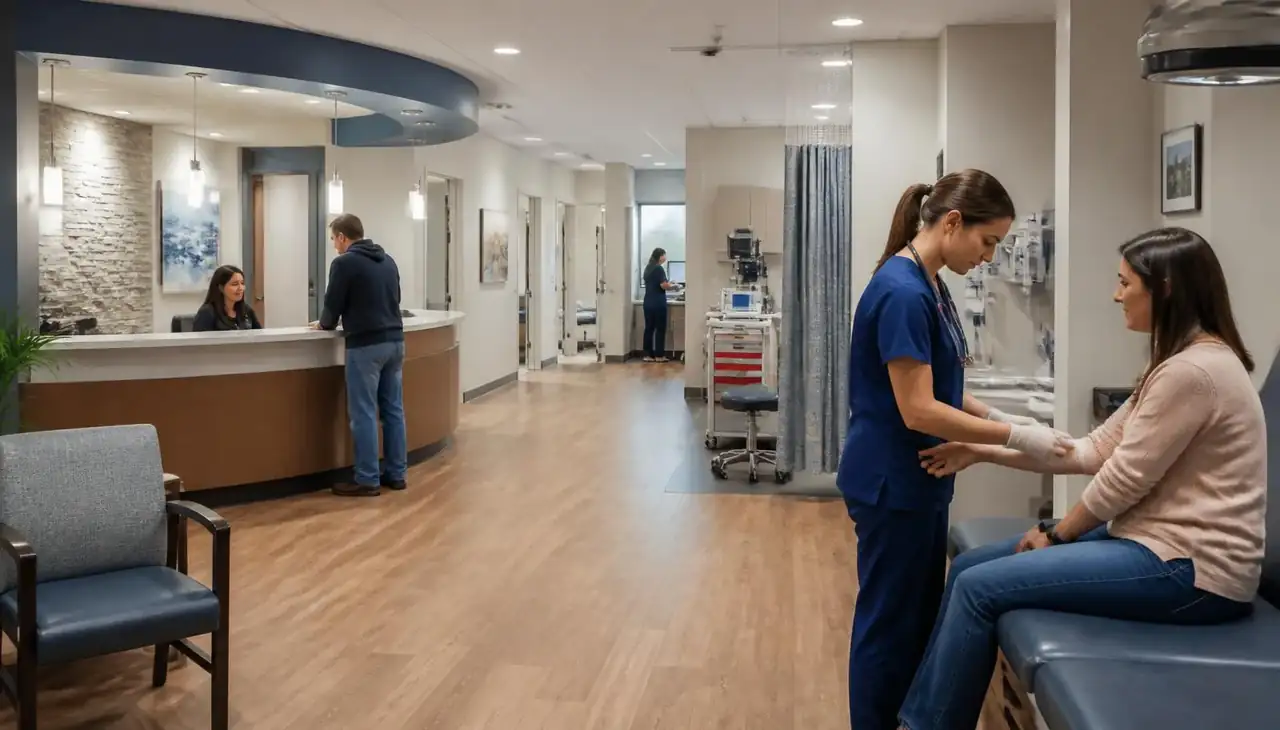
Nevada urgent care team treating a walk-in patient during a busy clinic shift
Specialty Billing for Urgent Care Centers

Urgent Care Billing Services in Nevada

Urgent care runs on speed, and your billing has to keep up with it. Choosing between an S9083 global fee and a standard E/M code, capturing a point-of-care lab correctly, closing out a Saturday's worth of walk-ins before Monday — this is where most billing companies fall behind. Nevada Med Billing built our process around how urgent care actually works, so a laceration repair on a Tuesday afternoon and an occupational health physical on a Saturday both get billed right the first time.

Or call (631) 652-3106
96–98% clean-claim rate on urgent care claimsClaims submitted within 24 hours of visit closeUnder 5% denial rate25–30 days in A/R96–98% clean-claim rate on urgent care claimsClaims submitted within 24 hours of visit closeUnder 5% denial rate25–30 days in A/R

Why Nevada urgent care centers
choose Nevada Med Billing

Urgent care billing punishes a generalist. Every claim has to move fast, and the S9083 versus E/M decision alone can be the difference between a paid claim and a denial. Here's what a specialty partner actually does differently.

Built around walk-in volume

Most billing companies are built for scheduled visits with predictable weekly cycles. We built our workflow around same-day, unscheduled encounters instead, so claims move within 24 hours of visit close rather than sitting until end of week.


S-code and E/M routing, handled correctly

Commercial payers don't agree on whether they want S9083, S9088, or a standard E/M code for the same encounter. We route each claim to what the specific payer contract calls for, instead of defaulting to one code family and absorbing the denials that follow.

A Nevada team with Nevada payer knowledge

We're a Nevada-based billing partner, not a national vendor treating your state as one line item among fifty. Every workflow is HIPAA compliant, with a signed Business Associate Agreement in place before any PHI changes hands.

One point of contact

Your practice gets a dedicated account contact who knows your provider mix, your payer contracts, and your denial patterns — not a rotating support queue.

Works with the EHR you already run

We integrate with the practice management and EHR platforms urgent care centers actually use, including Experity, DocuTAP, Kareo, and AdvancedMD. See our full EHR Integrations list for the systems we connect to directly.

Where Nevada urgent
care revenue gets lost

Urgent care revenue rarely disappears in one obvious mistake. It leaks at the same handful of points, visit after visit, and by the end of the month it adds up to real money.

  1. S-code vs. E/M coding mismatch

    Commercial payers differ on whether they reimburse S9083, S9088, or a standard E/M code for the same encounter. Pick the wrong one, or the right code for the wrong payer, and a clean visit turns into a denial.

  2. Modifier 25 and 59 scrutiny

    Same-day E/M plus procedure billing — a visit combined with a laceration repair, for example — draws close payer attention. We apply and document modifiers 25 and 59 with real support behind them, not as a default.

  3. Point-of-care lab and diagnostic billing

    CLIA-waived labs (strep, flu, COVID, glucose, urinalysis) and in-house X-ray need accurate procedure and handling codes. These are the charges that go missing when a claim isn't reconciled against the actual visit log.

  4. Facility fee and split-billing errors

    Whether a claim should be billed as a global fee, a split professional and facility claim, or a separate line item depends on your setup and the payer's contract. Get the model wrong on a busy day and the error repeats across every claim from that day.

  5. Telehealth place-of-service mismatches

    Virtual urgent care visits need the right modifier (95) and place-of-service code (02 or 10), matched to the payer's current telehealth policy. These rules vary by payer and change without much warning.

  6. Occupational health and employer-direct confusion

    Pre-employment physicals, drug screening, and employer-billed injury care need a separate workflow from insurance billing. Running both through the same process is a fast way to introduce errors on both sides.

Urgent care providers and practices
we bill for in Nevada

Solo and independent urgent care clinics

Single-location practices get the same S-code routing and same-day claim submission as larger groups, with pricing that scales with collections.

Multi-site urgent care groups and chains

Consolidated coding, credentialing, and denial management across every location, so a payer contract change at one clinic doesn't quietly break billing at another.

Physicians, PAs, and nurse practitioners

The same coding accuracy and modifier discipline apply whether the rendering provider is a physician, a PA, or an NP, billed under the correct provider and supervision rules.

Occupational health and employer-direct clinics

Employer-billed services — physicals, drug screening, injury care — run through a separate workflow from standard insurance billing under the same roof.

Telehealth-enabled urgent care

Virtual visit billing follows current telehealth modifier and place-of-service rules, for practices running both in-person and virtual urgent care.

Hospital-affiliated urgent care centers

Coordinated professional and facility-side billing for urgent care centers operating under a hospital system, including the right global, split, or separate billing model for each case.

Urgent care CPT,
HCPCS, and ICD-10 codes we bill correctly, every time

Urgent care coding comes down to a handful of decisions made at the point of care. Here's what we code and why each family matters.

Urgent care visit and facility codes

CodeService
S9083Global urgent care visit fee — a flat per-encounter code some commercial payers require
S9088Services provided in an urgent care facility, per encounter, billed alongside the E/M code

Evaluation and management codes

CodeService
99202–99205New patient office visit, by complexity
99211–99215Established patient office visit, by complexity
99281–99285Emergency department-level visit, used when acuity approaches ED-level care

Common procedure codes

CategoryExamples
Laceration repairSimple, intermediate, and complex repair, coded by size and site
Fracture care and splintingClosed treatment and splint or strap application
Wound careDebridement and dressing codes by wound size and depth
InjectionsTherapeutic, prophylactic, and diagnostic injection codes
DiagnosticsX-ray and point-of-care lab handling codes

Point-of-care (CLIA-waived) lab codes

TestNote
Rapid strepNeeds the correct waived-test handling code, not just the test itself
Flu / COVIDCombined or separate panels billed per payer policy
GlucosePoint-of-care handling code applies
UrinalysisDipstick and microscopic exam are coded differently

Modifiers and telehealth codes

Code / ModifierMeaning
Modifier 25Separately identifiable E/M on the same day as a procedure
Modifier 59Distinct procedural service
Modifier 95Synchronous telehealth
POS 02 / 10Telehealth place of service, must match how care was actually delivered

ICD-10 diagnosis examples common to urgent care

CodeDiagnosis
S61.409AOpen wound of hand, initial encounter
J06.9Acute upper respiratory infection, unspecified
S93.4Sprain of ankle
A08.4Viral intestinal infection, unspecified
S60.919AUnspecified superficial injury of hand, initial encounter

Coding requirements vary by payer, provider type, and documentation. This overview is educational rather than billing advice for a specific claim. We verify current payer policy before every submission.

Full-cycle urgent care
revenue cycle management

  1. 01

    Eligibility and benefits verification

    Insurance, benefits, demographics, and payer requirements get validated before or at the point of service, catching front-end errors before they turn into denials.

  2. 02

    Point-of-service collections support

    Accurate copay, coinsurance, and self-pay estimate workflows help your front desk collect the right amount at the time of visit instead of weeks later.

  3. 03

    Charge capture and S-code / E/M selection

    Procedure logs, visit documentation, and diagnostic charges get reconciled against what actually happened at the point of care, with the correct S-code or E/M selection for each payer.

  4. 04

    Claims submission and scrubbing

    Clean claims are scrubbed and submitted within 24 hours of visit close, with modifier and code-family checks built into every claim before it leaves the queue.

  5. 05

    Denial management and appeals

    Every denied claim gets reviewed for root cause — an S-code mismatch, a modifier error, an eligibility gap, or a documentation issue — and appealed with the specific evidence that denial reason requires.

  6. 06

    Accounts receivable follow-up

    Proactive follow-up on outstanding balances keeps A/R days low even through high-volume weeks.

  7. 07

    Patient statements and self-pay collections

    Transparent, structured patient billing covers the full mix of insured, underinsured, and uninsured patients urgent care sees walking through the door.

  8. 08

    Payment posting and reconciliation

    All payer and patient payments are posted and reconciled daily, keeping your books accurate through busy periods.

  9. 09

    Credentialing and payer enrollment

    Enrollment and credentialing with commercial payers, Medicare, and Nevada Medicaid keeps new providers and new locations from ever billing against a pending contract.

  10. 10

    Referral and care coordination support

    When a patient is referred to a primary care provider, or handed off to an emergency department for a higher level of care, documentation has to travel with them cleanly. We keep that record accurate on the billing side, so a referral or handoff doesn't turn into a coding gap or a duplicate claim.

Facility fees,
workers' comp, and Nevada urgent care payer rules

Most billing companies stop at submitting your claims. We go a level deeper into the specifics that decide whether a Nevada urgent care claim gets paid in full.

  • Facility fee, global, and split billing models

    Whether your center bills a global fee, splits professional and facility charges, or bills them as separate line items depends on your operational setup and each payer's contract. We apply the right model per payer instead of defaulting to one approach across the board.

  • Workers' compensation and injury claims

    Work-related injuries follow a different claims process than standard insurance, with their own forms, fee schedules, and reporting requirements. We handle workers' comp claims as their own workflow, separate from commercial and self-pay billing.

  • Occupational health and employer-direct billing

    Pre-employment physicals, drug screening, and workplace injury care billed directly to an employer follow yet another workflow, distinct from both insurance billing and workers' comp. We keep all three from getting tangled with each other.

  • Telehealth and virtual urgent care billing

    Virtual visit billing is matched to current Nevada payer telehealth policy, including modifier 95, place-of-service 02 or 10, and payer-specific coverage rules that shift more often than in-person billing rules do.

  • The Nevada urgent care billing market

    Nevada's urgent care market is concentrated in Las Vegas, which accounts for more than half of the state's registered urgent care billing organizations, followed by Reno, North Las Vegas, Sparks, and Pahrump. Nevada Medicaid covers urgent care services for eligible beneficiaries, with plan-specific authorization rules and rate structures we track directly rather than applying a generic multi-state template.

Results Nevada urgent care
practices see after switching

  • 96–98%

    Clean-claim rate on urgent care claims

  • Under 5%

    Denial rate across submitted claims

  • 25–30

    Days in A/R

  • 25–30%

    Increase in collections

We see sixty-plus walk-ins on a busy Saturday. Claims used to sit for days before submission. Now they go out the same day, and our cash flow finally matches our patient volume.
Urgent Care Clinic
Las Vegas, NV
Our S-code denials dropped almost right away once they took over routing. They actually know which payers want S9083 instead of a straight E/M code. Our last vendor didn't.
Multi-Site Urgent Care Group
Reno, NV
Separating our employer-direct occupational health billing from insurance billing used to be a mess. They fixed it in the first month and it's stayed clean since.
Practice Manager
Henderson, NV

Urgent care billing
support across Nevada

Las Vegas, Nevada

Las Vegas

Home to the largest concentration of Nevada urgent care centers by a wide margin, including multi-site chains and hospital-affiliated locations running high walk-in volume.

Reno, Nevada

Reno

We bill for Reno-area urgent care clinics working through northern Nevada's commercial payer mix alongside Nevada Medicaid.

North Las Vegas & Henderson, Nevada

North Las Vegas & Henderson

Growing urgent care markets that get the same S-code routing discipline and same-day submission as our Las Vegas clients.

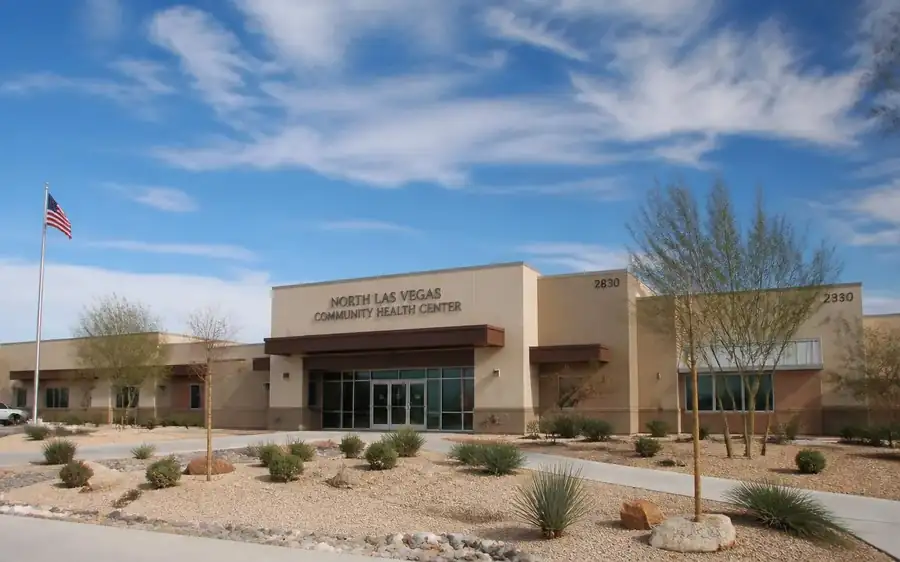
Sparks, Pahrump, and rural Nevada: smaller, more concentrated urgent care markets where a shorter list of payers carries most of the volume, which makes denial patterns faster to systematize once the local payer mix is mapped.

Frequently asked questions

Can't find what you need? Our Nevada team answers every question before you commit.

Most Nevada practices are fully onboarded in 10 to 14 business days. We map your workflows, connect to your EHR and clearinghouse, migrate open work, and run a parallel period so nothing gets dropped during the transition.

Yes. We route each claim to what the specific payer contract requires instead of defaulting to one code family, which is the most common source of avoidable urgent care denials.

Yes. We support global, split, and separate billing models depending on your operational setup and each payer's requirements.

Yes. Workers' comp claims run through their own workflow, with the correct forms, fee schedules, and reporting requirements, kept separate from commercial and self-pay billing.

Yes. Employer-billed services like physicals, drug screening, and injury care run through a separate workflow from both insurance billing and workers' comp, so none of the three cross over into another.

Yes. We apply the correct modifier and place-of-service code for telehealth visits, matched to current Nevada payer policy.

We support upfront cost estimates, point-of-service collection workflows, and structured patient statements for self-pay and underinsured patients, a common part of urgent care's walk-in population.

Yes. We manage enrollment and credentialing with commercial payers, Medicare, and Nevada Medicaid, including revalidation, so new providers never bill against a pending contract.

Yes. Solo and small-group urgent care practices make up a large share of our client base. Pricing scales with collections, with no large-group minimum.

Every workflow is HIPAA compliant. Access is role-based and logged, staff complete annual HIPAA training, and we sign a Business Associate Agreement before any PHI is exchanged.

Pricing is a percentage of collections rather than a flat fee, so cost scales with what your practice actually collects. Exact rates depend on visit volume and payer mix. We quote it directly during a free audit.

Free revenue audit

Get a free urgent care billing audit for your Nevada practice

Book a free 90-day revenue audit. We review your claims, denials, and aging — S-code by S-code, modifier by modifier — then show you exactly where the money is going. No cost, no obligation. We respond within one business day.